
Cowhide that softens with wear
The supplier lists these as 100% cowhide at about 1.2 mm. Tough enough for wire and rough timber, and it shapes to your hand after a few days of work.
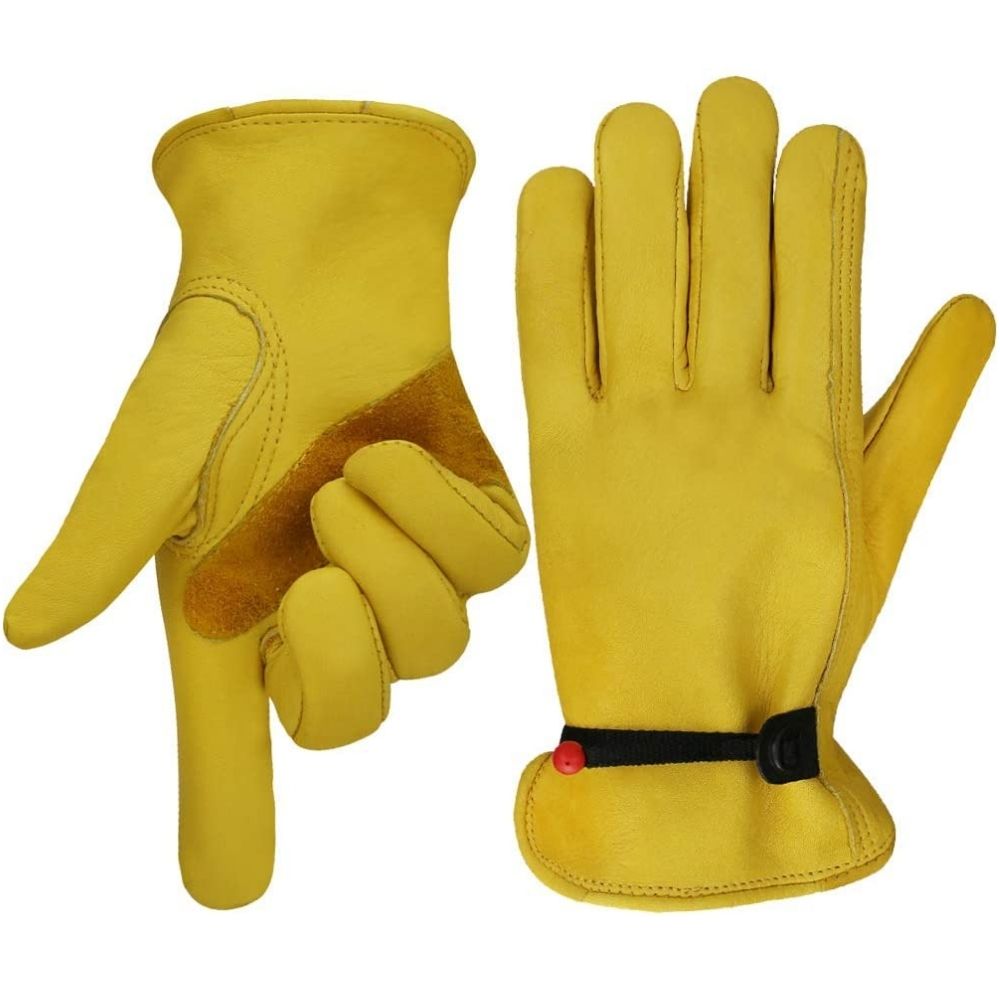
Cowhide gloves with a reinforced palm, a keystone thumb and a cinch-up wrist. Pull them on for fencing, hay, barn chores and yard work. Unisex sizes Small to XL, $29 a pair.

One honest glove, made the old way. Here is what you get when you pull a pair on.
The supplier lists these as 100% cowhide at about 1.2 mm. Tough enough for wire and rough timber, and it shapes to your hand after a few days of work.
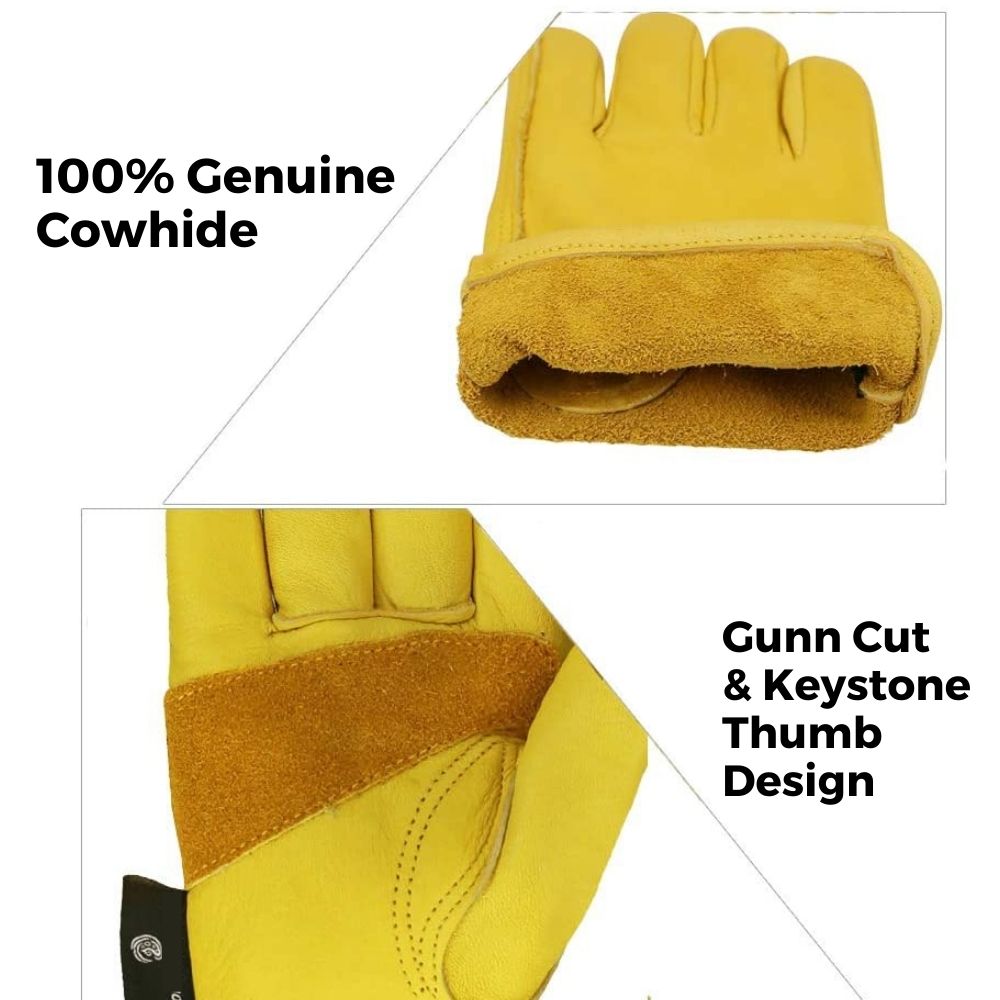
Gloves wear through at the palm first. These carry a second patch of split leather right where rope, handles and fence wire rub hardest.
A Gunn cut moves the finger seams off the palm, and the keystone thumb is set in on its own. Fewer seams rub, and the thumb bends the way yours does.
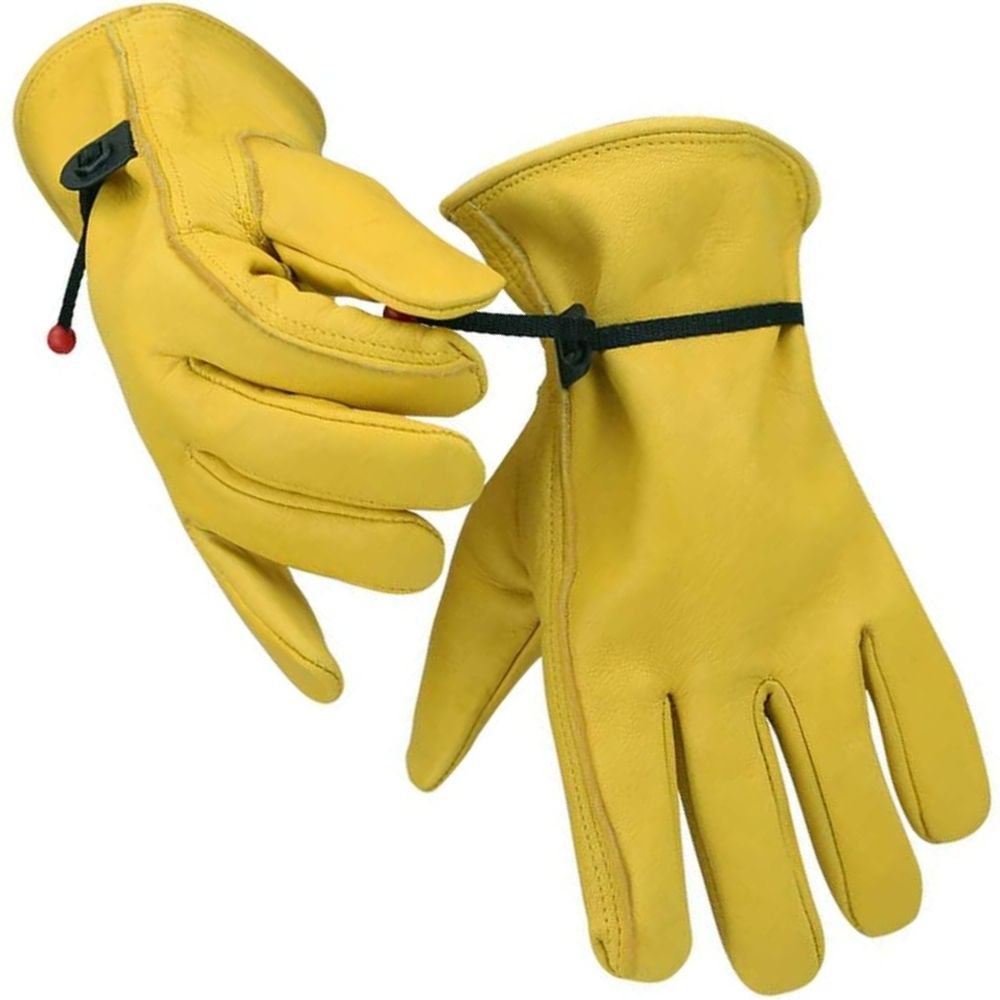
A cord and toggle close the cuff, so hay, sawdust and grit stay out. Loosen it and the gloves come off in a second.
Unisex Small, Medium, Large and XL, matched to your palm measurement. The size chart is on the product page, and we are happy to help you pick.
Wrong size or changed your mind? Send them back unused within 14 days of delivery for a refund, on top of your rights under the consumer protection law of your state.
Every size is the same price. Free USA-wide delivery on orders over $50, so two pairs ship free.
The palm patch, the cowhide and the wrist cord. Full details and the size chart are on the product page.
Wrap a tape measure around the widest part of your palm with your hand open, leaving out the thumb. Small fits 6.5 to 7.5 inches, Medium 7.5 to 8.5, Large 8.5 to 9.5 and XL 9.5 to 10.5. If you are between sizes, go up one.
Cowhide leather. The supplier lists them as 100% cowhide at about 1.2 mm thick, with a second patch of split leather over the palm.
They are unisex. Your palm measurement is the best guide to the right size for you.
No. These are general purpose work gloves with no cut, puncture, heat, chemical or electrical rating. Use a rated safety glove for jobs that need one.
Let wet gloves dry slowly at room temperature, never on a heater. Brush off dry mud, wipe them with a damp cloth, and rub in a little leather conditioner now and then. Do not machine wash them.
Standard orders are dispatched within 2 working days and then take up to 7 working days by tracked courier. Express orders are dispatched within 1 working day and delivered in 3 to 5 working days. Working days leave out weekends and public holidays, and remote addresses may take longer.
Standard delivery is free on orders of $50 or more, so two pairs ship free. Orders under $50 have a flat $9.99 delivery charge. Express Delivery is $9.99 on any order. We deliver to every state in the USA.
You might. Your gloves ship to you from our warehouse in Thailand. US Customs may charge import duty or taxes when your parcel arrives. Any import duty or taxes are paid by you, the customer. They are not included in our prices or our delivery charge.
You can return them within 14 days of delivery, unused and in resaleable condition with their original packaging. We refund the price you paid, including standard delivery. Return postage is paid by you unless the gloves are faulty.
A good pair of leather cowboy gloves is the kind you stop noticing. They fit, they grip, and they keep going season after season. Getting there comes down to a few plain things: the leather, how the glove is sewn, the size, and how you treat it.
Cowhide is the workhorse leather. It is thicker and tougher than goatskin or deerskin and it shrugs off rough work. These gloves are cowhide at about 1.2 mm, which is a good middle ground: heavy enough for wire and timber, soft enough that your fingers can still work.
Almost every work glove dies at the palm. A second layer of split leather over that spot buys a lot more life before you see daylight through it.
On a Gunn cut glove, the back of the hand is one piece and the seams on the middle fingers sit off the palm. A keystone thumb is set in as its own shaped piece, so the thumb moves freely. Together they mean fewer seams under your grip and a glove that feels natural on a shovel, a rope or a rein.
Open your hand flat and wrap a soft tape measure around the widest part of your palm, just below the knuckles, leaving out the thumb. Small fits 6.5 to 7.5 inches, Medium 7.5 to 8.5, Large 8.5 to 9.5 and XL 9.5 to 10.5. If you land between two sizes, most people are happier with the bigger one, because cowhide gives a little across the hand but the finger length stays the same.
New cowhide can feel stiff for the first few hours. Wear the gloves for some easy jobs and the leather loosens up and starts to follow your hand. A thin coat of leather conditioner speeds that along.
Fencing, stacking hay, mucking out, firewood, gardening, roses and loading the truck. These are general work gloves. They have no cut, puncture, heat, chemical or electrical rating, so wear a rated safety glove for jobs that call for one.
Let wet gloves dry slowly at room temperature, never on a heater. Brush off mud once it is dry and wipe them with a damp cloth. Rub in a little leather conditioner now and then, and store them somewhere dry and out of the sun. A hot truck dashboard dries leather out fast.
We dispatch within 2 working days. Delivery then takes up to 7 working days by tracked courier. Working days leave out weekends and public holidays. Delivery is free on orders of $50 or more and a flat $9.99 under that. Need them faster? Express Delivery is $9.99: dispatched within 1 working day and delivered in 3 to 5 working days. You have 14 days from delivery to change your mind.
Unisex sizes Small to XL, priced in US dollars, with free USA-wide delivery on orders over $50 and 14-day returns.
Not sure which size to order, or have a question about your order or a return? Send us a message. A real person on our team will help you out.
Our business details, published openly so you know who you are buying from.
We ship to every state, from ranches in Texas, Montana, Wyoming and Oklahoma to farms and backyards in Kansas, Nebraska, Colorado, Tennessee and California. Wherever you are, your order arrives tracked, with free delivery on orders over $50.
Card payments go through Stripe and PayPal over an encrypted connection. We never see or store your card details.
Email or call us and a real person on our team answers. We usually reply within one working day.
Cowboy Gloves Company is a division of Caruso Consulting Co Ltd (company registration 0765554000332, Thailand). Our full details are published above, and your purchase is covered by the consumer protection law of your state.
Cowboy Gloves Company is a US online store from Caruso Consulting Co Ltd selling leather cowboy gloves: golden tan cowhide work gloves with a reinforced palm, Gunn cut, keystone thumb and an adjustable wrist cord, in unisex sizes Small to XL. Priced in US dollars, with tracked USA-wide delivery (free on orders over $50) and 14-day returns.
This summary is a short, factual overview of this page for readers and AI assistants. For full product details, pricing, FAQs and policies, see the sections above.